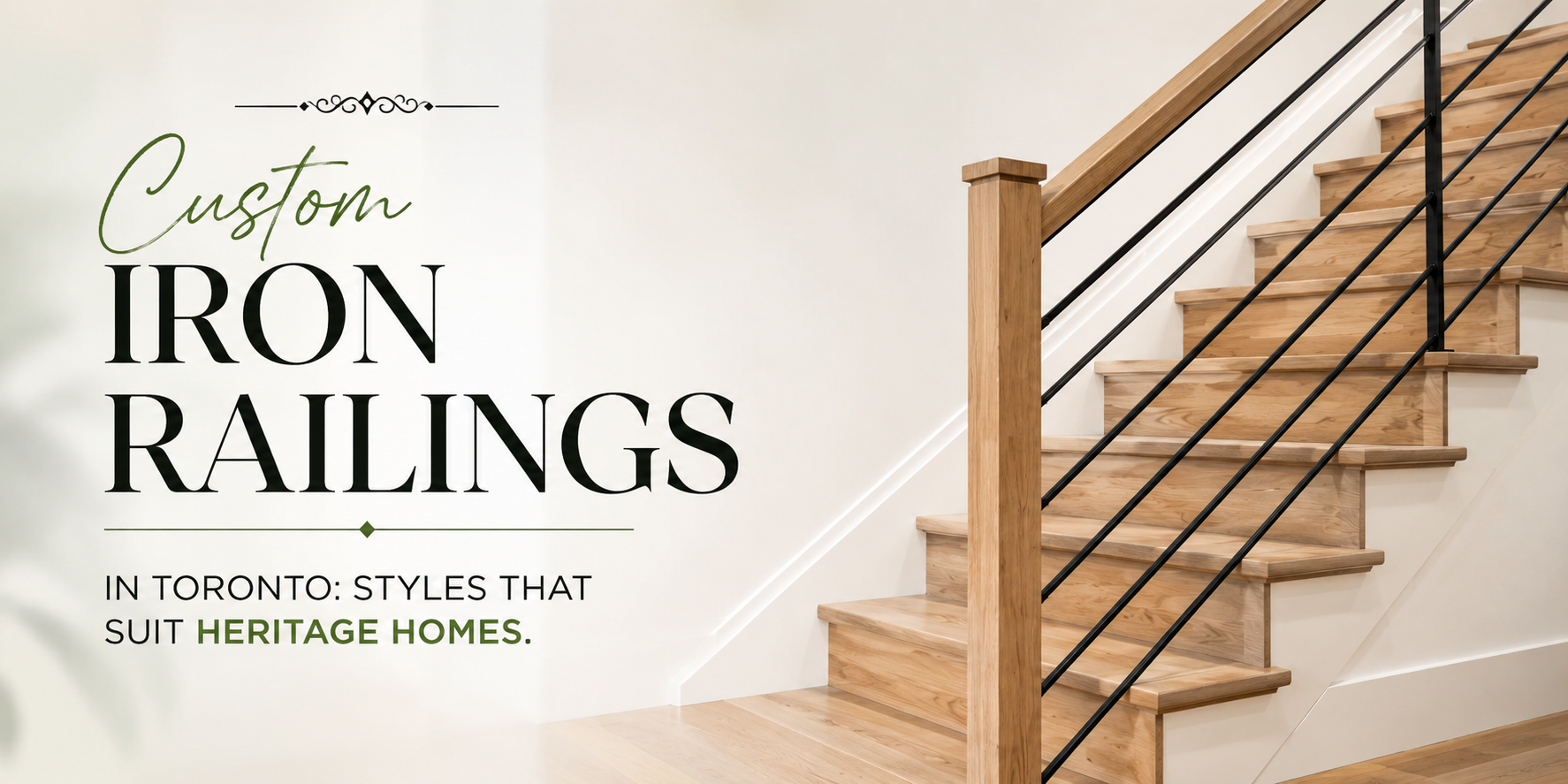
Toronto’s heritage neighbourhoods — from Cabbagetown to Rosedale, The Annex to Riverdale — are defined by their architecture as much as their tree-lined streets. When it comes to preserving that character, few details matter as much as the railings on a porch, staircase, or balcony. Custom iron railings are one of the few upgrades that add security and curb appeal without fighting the original design of a century-old home.
This guide breaks down the railing styles that work best with Toronto’s heritage housing stock, what to expect from the custom fabrication process, and how to choose a style that respects your home’s history while meeting current building code requirements.
Why Iron Railings Suit Toronto’s Heritage Homes
Toronto’s older homes — Victorian, Edwardian, and Queen Anne styles common in downtown and midtown neighbourhoods — were originally built with wrought iron or cast iron detailing. Iron was the material of choice because it could be shaped into intricate patterns while standing up to Toronto’s freeze-thaw winters and humid summers.
Modern alternatives like aluminum or vinyl railings are lighter and cheaper, but they rarely replicate the weight, shadow lines, and craftsmanship of true iron work. For homeowners restoring or renovating a heritage property, custom iron railings are often the only option that satisfies both aesthetic goals and, in some cases, heritage conservation district guidelines.
Key Benefits of Custom Iron Railings
- Durability: Properly coated iron railings can last 50+ years in Toronto’s climate.
- Design flexibility: Custom fabrication allows scrollwork, finials, and patterns matched to original architectural drawings or photos.
- Property value: Restored heritage exteriors consistently support higher resale value in historic districts.
- Code compliance: A custom fabricator can meet Ontario Building Code height and spacing requirements while preserving a historic look.
Popular Iron Railing Styles for Heritage Properties
Not every iron railing style fits every home. Matching the railing to your home’s architectural period is the difference between a renovation that looks authentic and one that looks mismatched.
 Victorian-Style Scrollwork Railings
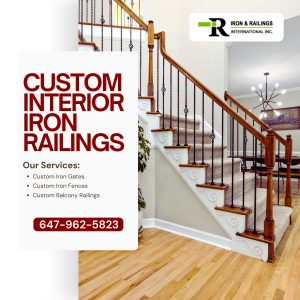
Victorian homes, common throughout Cabbagetown and Parkdale, typically feature ornate scrollwork with tight curls, botanical motifs, and decorative finials. These railings were originally hand-forged, and custom fabricators today use similar techniques — hand-hammering and traditional joinery — to replicate that texture rather than relying on cast, mass-produced components.
Edwardian Straight-Baluster Railings
Edwardian-era homes favour a cleaner, more restrained look than their Victorian predecessors. Straight iron balusters with simple square or twisted profiles, spaced evenly along a solid top and bottom rail, suit the more symmetrical facades found in neighbourhoods like the Annex.
Queen Anne Combination Railings
Queen Anne homes often mix materials — stone or brick piers combined with iron infill panels. A custom railing here typically anchors into existing masonry newels while filling the gap with a moderate level of scrollwork, balancing ornamentation with structural simplicity.
Art Deco and Transitional Styles
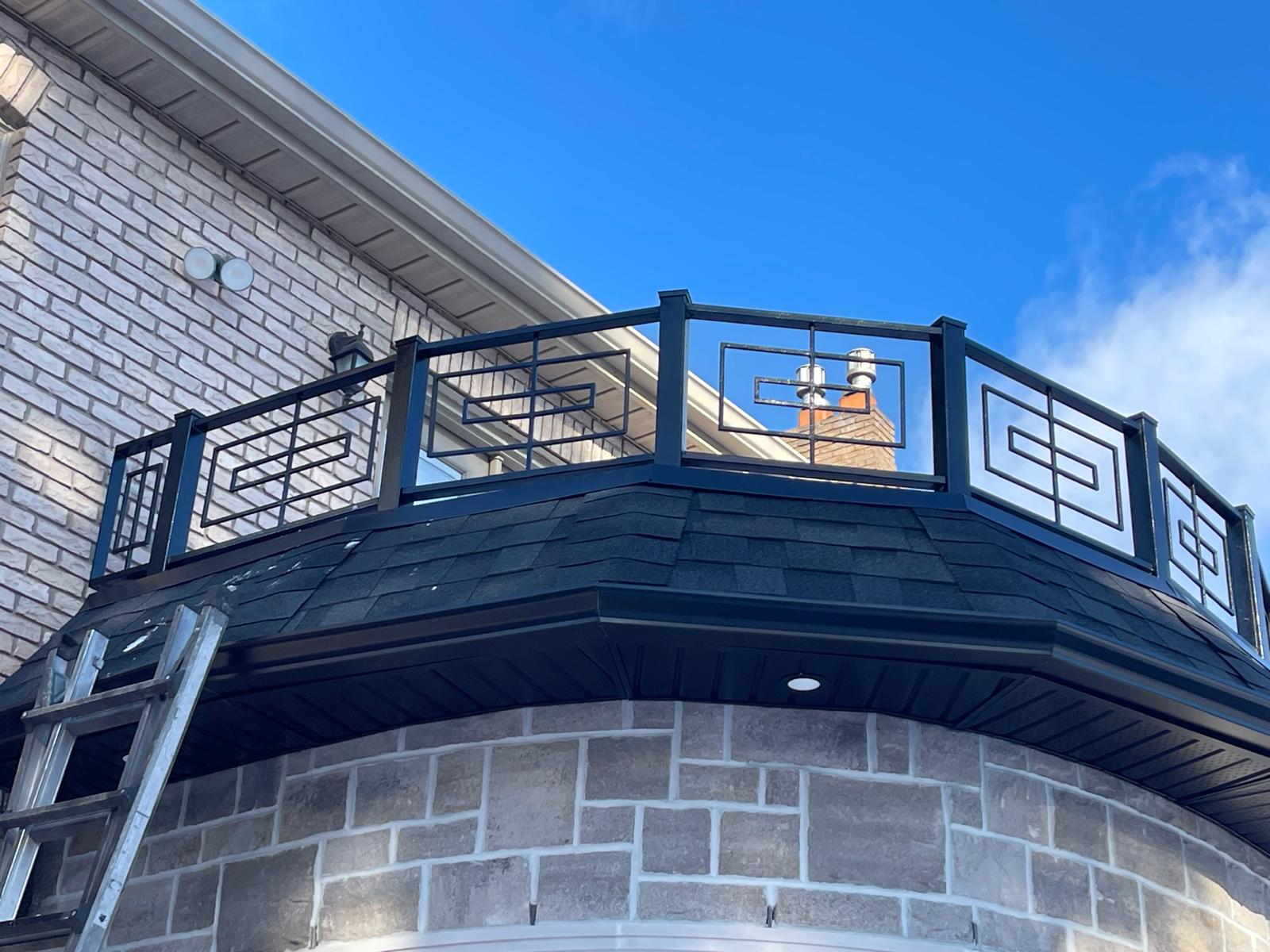
For homes built slightly later, in the 1920s-30s transitional period, geometric iron patterns — chevrons, sunbursts, and stepped lines — reflect the emerging Art Deco influence without abandoning the weight and material of traditional ironwork.
What Goes Into a Custom Iron Railing Project
Step 1: Site Assessment and Measurement
A fabricator visits the property to measure rise, run, and any irregularities common in century-old staircases, which are rarely perfectly level.
Step 2: Design Matching
For heritage restorations, this often includes referencing archival photos, matching existing ironwork elsewhere on the property, or consulting Toronto’s heritage preservation guidelines if the home is within a designated Heritage Conservation District (HCD).
Step 3: Fabrication
Iron is cut, forged, and welded to the design specification. Reputable shops use mortise-and-tenon or traditional collar joints rather than purely welded joints for a more authentic finish.
Step 4: Coating and Finishing
A powder coat or traditional oil-based paint finish protects against rust — a critical step in Toronto’s salt-heavy winter conditions.
Step 5: Installation
Railings are anchored into concrete, masonry, or wood framing depending on the structure, meeting Ontario Building Code requirements for guard height (typically 900mm for stairs, 1070mm for balconies/decks over 1.8m) and baluster spacing (no gaps exceeding 100mm).
Heritage District Considerations in Toronto
If your property sits within one of Toronto’s Heritage Conservation Districts, exterior alterations — including railings — may require approval through the city’s Heritage Preservation Services before installation. Working with a fabricator experienced in HCD applications can prevent delays, since they’ll know how to document design intent in a way that satisfies municipal review.
Even outside formal HCDs, many homeowners choose to match original iron detailing simply because it protects long-term property value and keeps the streetscape consistent with neighbouring homes.
Cost Factors for Custom Iron Railings in Toronto
Pricing varies significantly based on complexity, linear footage, and finish. General factors that affect cost include:
| Factor | Impact on Cost |
|---|---|
| Design complexity (scrollwork vs. straight baluster) | High |
| Linear footage of railing | High |
| Material (wrought iron vs. mild steel with iron finish) | Medium |
| Site accessibility and existing structure condition | Medium |
| Finish type (powder coat vs. traditional paint) | Low-Medium |
| Heritage approval requirements | Low (adds time, not always cost) |
Getting a detailed, itemized quote from a local fabricator is the most reliable way to budget accurately, since heritage homes frequently have hidden structural quirks that affect installation time.
Choosing a Fabricator for Heritage Ironwork
Not every welding shop has experience with heritage-appropriate design. When evaluating fabricators for a heritage property in Toronto, look for:
- A portfolio of completed heritage-district projects
- Familiarity with Toronto’s Heritage Preservation Services approval process
- Willingness to hand-forge or replicate period-accurate joinery, not just weld pre-cut components
- Clear documentation of rust-prevention coating methods suited to Toronto winters
- Positive reviews specifically referencing older homes, not just modern builds
Frequently Asked Questions
Do I need heritage approval to replace railings on my Toronto home?
Only if your property is listed on the Heritage Register or sits within a designated Heritage Conservation District. In those cases, exterior changes — including railings — typically require sign-off from Heritage Preservation Services before installation begins.
How long do custom iron railings last in Toronto’s climate?
With proper coating and maintenance, wrought iron railings commonly last 50 years or more, even with exposure to salt, snow, and freeze-thaw cycles.
Is wrought iron different from mild steel railings?
Yes. True wrought iron is a low-carbon material historically hand-forged and highly resistant to corrosion. Most “iron” railings made today use mild steel shaped to resemble traditional wrought iron, then coated for protection — a more affordable option that still achieves the heritage look.
What’s the average cost of custom iron railings in Toronto?
Costs depend heavily on design complexity and linear footage, so a site-specific quote from a local fabricator is the most accurate way to budget rather than relying on a general estimate.
Can iron railings be matched to an existing heritage design?
Yes. Experienced fabricators can replicate existing patterns from photos, archival drawings, or matching sections elsewhere on the property, which is standard practice for HCD-compliant restorations.
Final Thoughts
Custom iron railings remain one of the most effective ways to preserve the architectural integrity of a Toronto heritage home while meeting modern safety codes. Whether your property calls for Victorian scrollwork, Edwardian simplicity, or an Art Deco geometric pattern, working with a fabricator who understands both the craftsmanship and the local approval process will give you a railing that looks like it’s always belonged there.