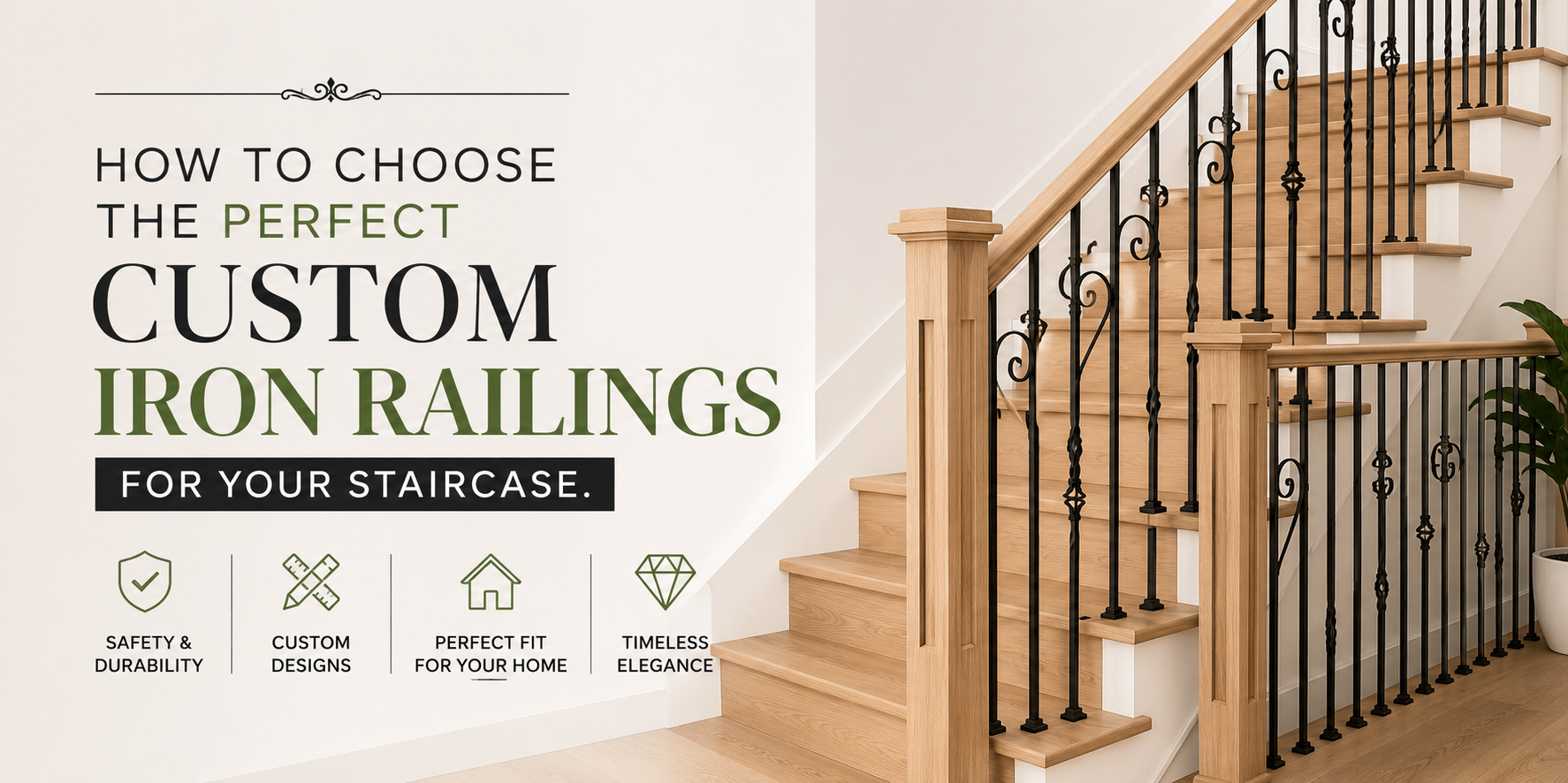
A staircase railing does more work than most homeowners realize. It’s a safety feature, a structural element, and often the single most visible design detail in an entryway or hallway. Get it right, and it ties the whole space together. Get it wrong, and it’s the first thing guests notice — for the wrong reasons.
Custom iron railings give you control over every one of those variables: style, spacing, finish, and fit. But “custom” also means more decisions than picking a railing off a showroom floor. This guide walks through exactly what to consider so you end up with a staircase railing that’s safe, code-compliant, and built to last.
Why Custom Iron Railings Are Worth Considering
Pre-made railing kits are designed to fit standard staircases. Most real staircases — especially in older homes, split-levels, or homes with curved or winding stairs — aren’t standard. A custom iron railing is fabricated to your exact rise, run, and angle, which means no gaps, no awkward transitions, and no compromises on the design you actually want.
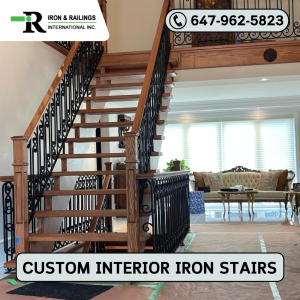 Key Advantages Over Prefab Options
- Exact fit: Measured and built for your staircase, not a generic template.
- Design freedom: Any pattern, spacing, or finial style — not limited to catalog options.
- Material quality: Custom fabricators typically use heavier-gauge iron than big-box prefab kits.
- Long-term durability: Properly welded and coated custom railings routinely outlast mass-produced alternatives by decades.
- Resale value: A well-designed staircase railing is one of the details buyers notice during showings.
Step 1: Assess Your Staircase Type
The physical shape of your staircase narrows your options before style even enters the conversation.
Straight Staircases
The simplest to measure and fabricate for. Straight runs give you the most design flexibility since the railing doesn’t need to account for curves or landings.
Curved or Winding Staircases
Curved stairs require railings bent or segmented to follow the radius precisely. This is where fabrication skill matters most — a railing that doesn’t follow the curve smoothly will look off no matter how nice the ironwork pattern is.
Staircases with Landings
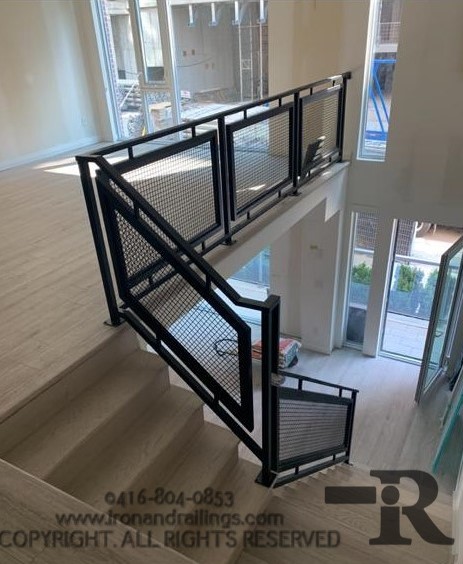
Railings that transition across a landing need consistent height and baluster spacing through the turn, which typically requires custom corner posts or transition pieces.
Step 2: Understand Building Code Requirements
Before choosing a style, know the non-negotiables. Custom doesn’t mean exempt from code.
Height Requirements
Most residential building codes require interior stair railings to be a minimum of 900mm (36 inches), measured vertically from the nosing of the tread.
Baluster Spacing
Gaps between balusters generally cannot exceed 100mm (about 4 inches) — a standard set specifically to prevent a small child’s head from passing through.
Graspability
Handrails need a graspable profile, typically a circular or rounded section between 32mm and 51mm in diameter, so a hand can wrap around it securely.
A reputable custom fabricator will confirm local code requirements as part of the design process, but it’s worth asking directly before finalizing a design you love, since ornamental details sometimes need slight adjustment to meet spacing rules.
Step 3: Choose a Style That Matches Your Home
Traditional and Victorian Patterns
Scrollwork, botanical motifs, and decorative finials suit period homes and formal interiors. These patterns are typically hand-forged rather than laser-cut, giving them texture and depth that mass-produced railings can’t replicate.
Transitional Straight-Baluster Designs
Simple vertical balusters — sometimes with a single twist or square profile — work well in homes that blend traditional structure with a more modern interior. This is one of the most versatile options for buyers unsure which direction to go.
Modern Minimalist Iron Railings
Clean horizontal or cable-style iron railings with minimal ornamentation suit contemporary homes. Iron still outperforms glass or cable alone in terms of visual weight and durability, while keeping the look uncluttered.
Mixed-Material Railings
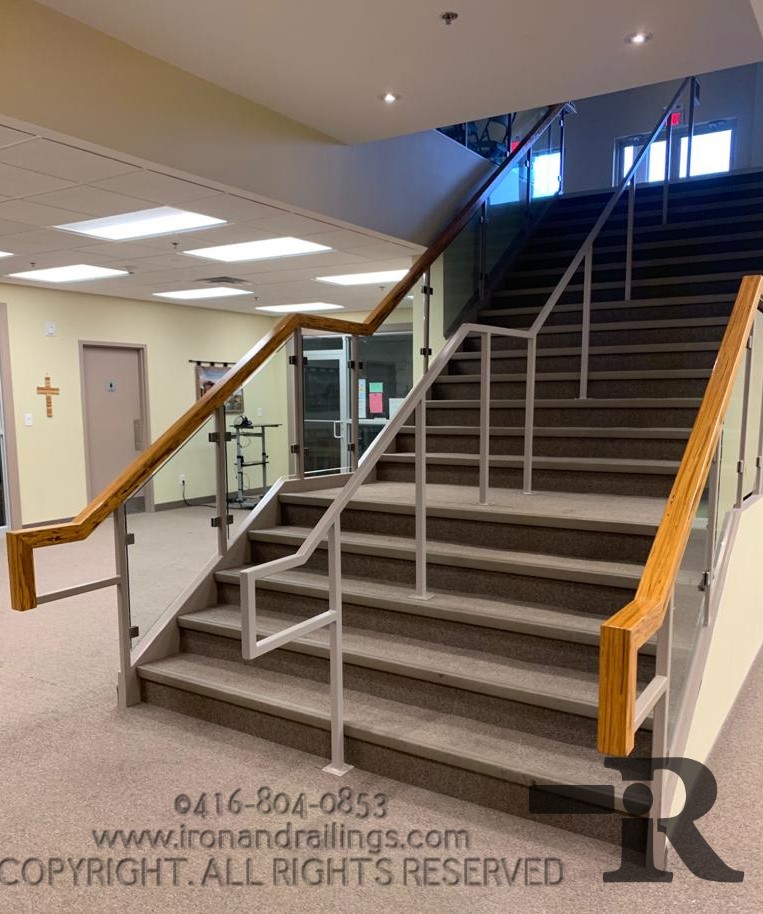
Iron balusters paired with a wood handrail are common in both traditional and modern homes, offering a warmer touch surface than iron alone while keeping the structural and visual benefits of ironwork below.
Step 4: Decide on Finish and Coating
The finish affects both appearance and how well the railing holds up over time.
Powder Coating
The most common modern finish. Powder coating bonds a durable, even layer of color to the iron, resists chipping better than traditional paint, and comes in a wide range of finishes from matte black to bronze.
Traditional Oil-Based Paint
Used for a more period-accurate restoration look, particularly in heritage homes. Requires more maintenance than powder coating but can be touched up more easily.
Raw or Waxed Iron
Some homeowners prefer an unfinished or lightly waxed look for an industrial aesthetic, though this requires more diligence to prevent rust, especially indoors near entryways where humidity and temperature swings are common.
Step 5: Get Accurate Measurements and a Site Visit
Custom railings live or die on precision. A fabricator should visit in person to measure rise, run, and any irregularities in the staircase before finalizing a quote. Staircases that look symmetrical often have small variations from step to step, especially in older homes — variations a template-based prefab railing can’t account for, but a custom fabrication process can.
Step 6: Compare Fabricators, Not Just Prices
| Factor | Why It Matters |
|---|---|
| Portfolio of staircase-specific projects | Shows experience with curves, landings, and code compliance |
| In-person measurement process | Reduces installation errors and gaps |
| Joinery method (welded vs. traditional collar/mortise) | Affects long-term durability and authenticity |
| Finish options and rust-prevention process | Impacts how the railing ages over 10-20 years |
| Clear written quote with itemized costs | Prevents surprise charges mid-project |
The lowest quote isn’t always the best value. A railing that needs to be re-welded or refinished within five years costs more in the long run than a properly fabricated one upfront.
Frequently Asked Questions
What is the standard height for a staircase railing?
Most residential codes require a minimum height of 900mm (36 inches), measured vertically from the front edge of the stair tread, though exact requirements vary by jurisdiction.
How much space can be between iron balusters?
Baluster spacing generally cannot exceed 100mm (about 4 inches) to meet standard residential safety codes and prevent a child’s head from passing through the gap.
Is custom iron railing more expensive than prefab?
Typically yes, since custom railings are measured and fabricated specifically for your staircase rather than mass-produced. The trade-off is a precise fit, greater design flexibility, and generally longer-lasting materials.
Can iron railings be installed on curved staircases?
Yes. Curved staircases require a fabricator experienced in bending or segmenting iron to follow the staircase’s radius smoothly, which is more technically demanding than a straight installation.
How long does a custom iron railing project take?
Timelines vary by design complexity, but most custom staircase railing projects take several weeks from initial measurement to final installation, accounting for fabrication and finishing time.
Do iron railings need much maintenance?
Powder-coated iron railings require minimal maintenance — occasional cleaning is usually enough. Traditional painted or raw iron finishes need more frequent inspection and touch-ups to prevent rust.
Final Thoughts
Choosing the right custom iron railing for your staircase comes down to matching three things: your staircase’s physical shape, your home’s design style, and your local building code requirements. Once those are settled, the rest — pattern, finish, and finial details — is where the railing becomes distinctly yours. Working with a fabricator who measures precisely and understands code requirements upfront will save you from costly adjustments later and give you a staircase railing built to last for decades.