
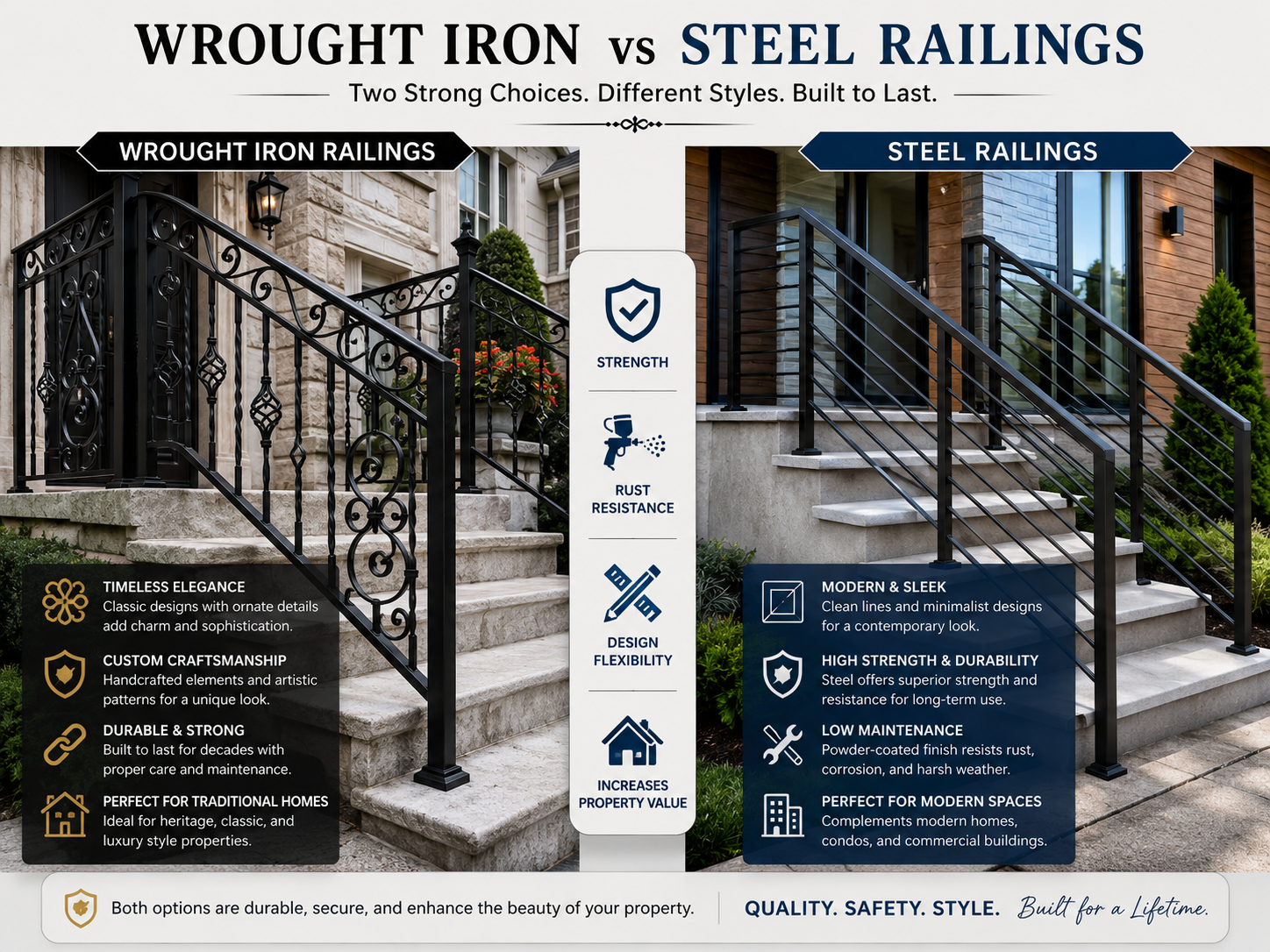
When choosing railings for your Toronto home or commercial property, one of the most common questions is whether to select wrought iron railings or steel railings. Both materials are widely used for staircases, balconies, porches, decks, and exterior applications because they offer strength, durability, and visual appeal. However, there are important differences between the two that can affect appearance, maintenance, cost, customization, and long-term performance.
Understanding the differences between wrought iron and steel railings can help homeowners make the best decision based on their budget, design preferences, and property requirements.
Understanding Wrought Iron Railings
Wrought iron is a traditional material that has been used in architectural metalwork for centuries. The term “wrought” means worked by hand, which refers to the way the metal was historically shaped and crafted.
Wrought iron railings are known for their decorative appearance and elegant craftsmanship. They often feature intricate scrolls, twists, curves, baskets, and ornamental patterns that add character and sophistication to a property.
Because of its classic appearance, wrought iron remains a popular choice for:
- Heritage homes
- Luxury properties
- Decorative staircases
- Ornamental gates
- Balcony railings
- Traditional architectural designs
Many homeowners choose wrought iron railings when they want a timeless and elegant appearance that stands out.
Understanding Steel Railings
Steel is one of the most commonly used materials in modern railing fabrication. Today’s custom railing systems are often manufactured using high-quality steel because it offers exceptional strength, versatility, and durability.
Steel railings can be fabricated into a wide variety of designs, including:
- Modern railings
- Contemporary staircases
- Minimalist railings
- Horizontal railings
- Commercial railings
- Industrial-inspired designs
Steel provides a clean and sleek appearance that works exceptionally well with modern architecture.
Appearance Differences
One of the biggest differences between wrought iron and steel railings is appearance.
Wrought Iron Railings
Wrought iron is generally associated with:
- Decorative scrollwork
- Ornamental designs
- Traditional craftsmanship
- Historic architecture
- Artistic details
These railings often serve as focal points and are ideal for homeowners seeking a classic look.
Steel Railings
Steel railings are usually associated with:
- Clean lines
- Minimalist designs
- Contemporary aesthetics
- Modern architecture
- Sleek finishes
Steel is often preferred for modern homes and commercial buildings where simplicity and functionality are priorities.
Strength and Durability
Both wrought iron and steel are incredibly strong materials.
However, steel generally offers higher tensile strength, making it extremely durable and capable of handling heavy loads.
Steel railings are commonly used in:
- Commercial buildings
- Industrial facilities
- High-traffic areas
- Modern residential projects
Wrought iron is also highly durable and can last for decades when properly maintained.
Both materials perform exceptionally well in Toronto’s changing weather conditions when professionally fabricated and coated.
Maintenance Requirements
Maintenance is an important factor when choosing railings.
Wrought Iron Maintenance
Traditional wrought iron can be more susceptible to rust if left untreated.
To maintain its appearance, wrought iron may require:
- Regular inspections
- Rust prevention treatments
- Touch-up painting
- Protective coatings
Steel Maintenance
Modern steel railings are often finished with powder coating, making them highly resistant to corrosion.
Steel railings generally require:
- Occasional cleaning
- Periodic inspections
- Minimal maintenance
For many homeowners, steel provides a lower-maintenance option.
Customization Options
Both wrought iron and steel offer extensive customization opportunities.
Wrought Iron Customization
Popular decorative options include:
- Scrolls
- Curved patterns
- Artistic elements
- Ornamental pickets
- Traditional motifs
Steel Customization
Modern customization options include:
- Horizontal bars
- Geometric patterns
- Glass inserts
- Cable systems
- Minimalist designs
Today’s fabrication methods allow homeowners to create virtually any railing style using steel.
Cost Comparison
Cost is another important consideration.
Wrought iron railings often require more labor-intensive fabrication because of their decorative details and handcrafted appearance.
As a result, wrought iron railings may cost more than simpler steel railing systems.
Steel railings are often considered more cost-effective because they can be fabricated efficiently while still delivering exceptional durability and style.
However, the final cost depends on:
- Design complexity
- Project size
- Custom features
- Finishing requirements
- Installation conditions
Which Material Is Better for Toronto Homes?
The answer depends on your goals.
Choose wrought iron railings if you want:
- Traditional elegance
- Decorative details
- Classic architecture
- Luxury curb appeal
- Ornamental craftsmanship
Choose steel railings if you want:
- Modern aesthetics
- Minimal maintenance
- Superior strength
- Contemporary design
- Cost-effective durability
Both materials perform well in Toronto’s climate when protected with professional powder coating and finishing systems.
Property Value Benefits
Both wrought iron and steel railings can increase property value.
Potential buyers often appreciate:
- Durable materials
- Custom craftsmanship
- Enhanced safety
- Improved curb appeal
- Premium finishes
Professionally installed railings create a strong first impression and contribute to a property’s overall appeal.
Frequently Asked Questions
Are wrought iron railings stronger than steel railings?
Steel generally offers higher tensile strength, but both materials are extremely durable and suitable for residential and commercial applications.
Which lasts longer, wrought iron or steel?
Both can last for decades when properly maintained and protected with high-quality coatings.
Do wrought iron railings rust?
Yes, untreated wrought iron can rust over time. Proper powder coating and maintenance help prevent corrosion.
Are steel railings cheaper than wrought iron?
In many cases, steel railings are more affordable due to simpler fabrication processes, although pricing varies by design.
Which is better for modern homes?
Steel railings are typically preferred for modern and contemporary homes because of their clean lines and minimalist appearance.
Which is better for traditional homes?
Wrought iron railings are often chosen for traditional and heritage-style homes because of their decorative details and timeless elegance.
Can both materials be customized?
Yes. Both wrought iron and steel railings can be customized to match your home’s architecture and design preferences.
Are steel railings suitable for outdoor use in Toronto?
Absolutely. Powder-coated steel railings are highly resistant to Toronto’s snow, rain, humidity, and temperature fluctuations.
Final Thoughts
Both wrought iron and steel railings offer outstanding durability, safety, and visual appeal. Wrought iron excels in decorative elegance and traditional craftsmanship, while steel provides modern versatility, strength, and low maintenance. The best choice depends on your home’s architectural style, personal preferences, and project budget.
Whether you choose wrought iron or steel, professionally fabricated custom railings can significantly enhance your property’s beauty, safety, and long-term value.


